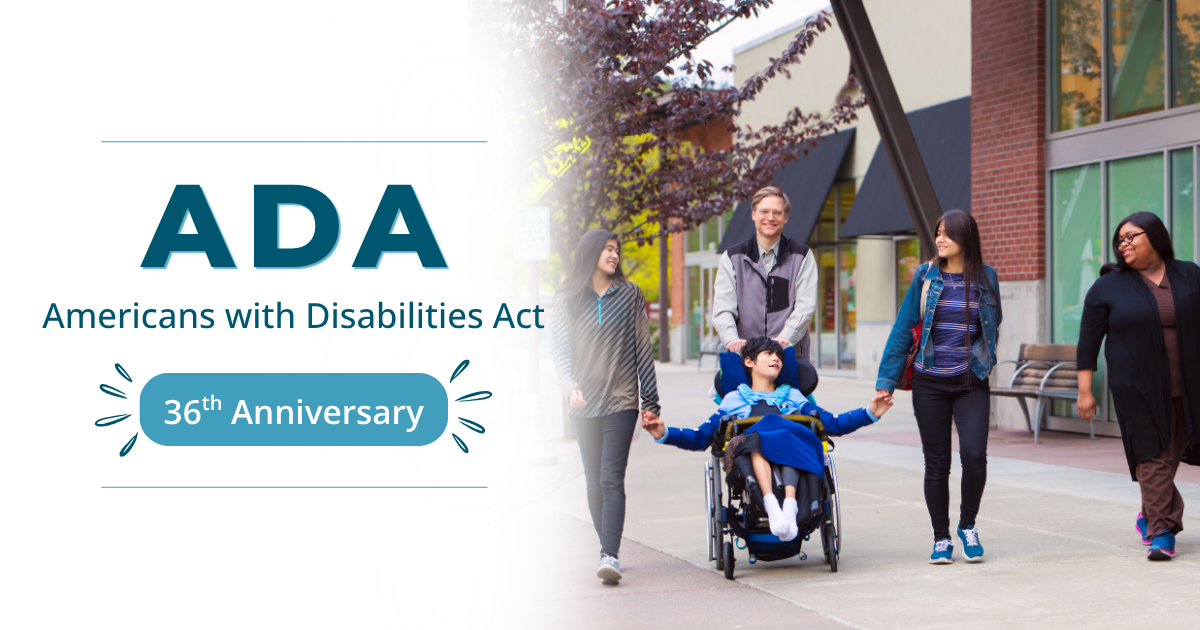
36th Anniversary of the ADA
The Americans with Disabilities Act (ADA) is a landmark federal civil rights law that protects individuals with disabilities from discrimination. Its purpose is to ensure that people with disabilities have the same opportunities as everyone else to access employment, public services, goods, facilities, and community life.
Advocacy efforts challenging harmful assumptions, stereotypes, and discrimination date back to the 1800s. The Disability Rights Movement gained traction in 1960, aligning with broader civil rights efforts for greater accessibility, inclusion, and equal treatment. These efforts led to important advances in disability rights and ultimately paved the way for the ADA, the first comprehensive civil rights law for people with disabilities in the United States.
On July 26, 1990, President George H.W. Bush signed the Americans with Disabilities Act into law, extending protections against discrimination to an estimated 43 million Americans with disabilities.
Today, the ADA prohibits disability-based discrimination across many aspects of everyday life. The law is organized into five sections, known as titles. Each title sets specific requirements for different types of organizations.
Title I – Employment
Equal access to employment opportunities like recruitment, hiring, promotions, training, pay, and social activities.
Title II, Subtitle A – State and Local Government Services
Equal opportunity to benefit from all programs, services, and activities, including:
Public education, transportation, recreation, healthcare, social services, courts, voting, emergency services, town meetings
Title II, Subtitle B – Public Transit
Equal opportunity to benefit from public transit systems, like buses and trains. Accessible vehicles and facilities. Accommodations, like adequate time to board.
*Private transit systems are also covered by the ADA under Title III (Businesses that are open to the public).
Title III – Businesses That Are Open to the Public
Equal opportunity to access the goods or services offered by businesses.
- Businesses, nonprofits, and privately operated transit need to comply.
- Commercial facilities are required to comply with the ‘ADA Standards for Accessible Design.’
Title IV – Telecommunications
Access to telecommunication. Telephone companies must provide services to allow callers with hearing and speech disabilities to communicate.
Title V – Other Important Requirements
How to implement the law. Examples of these requirements include:
- Prohibiting retaliation against a person who has asserted their rights under the ADA
- Stating that a person with a disability is not required to accept an aid or accommodation if they do not want to
- Authorizing courts to award attorneys’ fees to the winning party in a lawsuit under the ADA
- Directing certain federal agencies to issue guidance explaining the law
The Americans with Disability Act marked an important step toward a more inclusive society by establishing disability rights as civil rights. It has driven meaningful progress in accessibility, employment, education, and public life, empowering millions of Americans with disabilities to participate more fully in their communities. The ADA remains a powerful reminder that progress is possible and that building a more inclusive future benefits everyone.
Learn more about the ADA here: Introduction to the Americans with Disabilities Act | ADA.gov
Want help understanding your rights? Talk to your Care Manager or explore resources here: RIGHTS – Knowledge Center
Sources: